
Top 3 things to look for on a Diamond Certificate
- At May 02, 2012
- By admin
- In Blog
 0
0
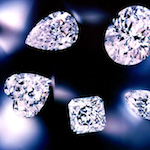
For many individuals, purchasing a diamond is both the most romantic and nerve-racking purchase of their lives. But most cannot differentiate between a real diamond versus a fake one or differentiate between qualities. To top it off, a glut of information, opinions and perspectives on the Internet confuses rather than clarifies the buying process. Consequently, it becomes all the more important to have proof of a diamond’s identity, authenticity, and value. And this is where a diamond certificate, or diamond quality report comes into play.
A certificate precisely evaluates a diamond’s individual characteristics and is an important tool to identify a stone. Purchasing a diamond without a certificate can be a very risky proposal because unscrupulous jewelers will inflate the grade of a diamond to the uninformed buyer. And for the other jewelers who do sell diamonds with certificates, there can be up to a 50% difference in the value of a diamond that has been graded by one lab, versus another. This is because there are dozens of gemological labs all over the world whose reputations as well as grading systems vary. In other words, one lab may claim the grade of the same diamond to be considerably higher than another lab simply because one is less stringent than the other.
One must also be aware of counterfeit certificates that are becoming more and more common, or being overly dependent on certificates. Much like the value of gold, all diamonds have a value that has been established by international trade networks and organizations. Therefore, be cautious of a ‘good deal’ when preparing to purchase a diamond because if a deal looks too good to be true, it may be because you are not purchasing the diamond that you think you are.
Below are the Top Three things every diamond buyer should look for on a diamond certificate:
1) The Laboratory that the diamond has been graded by. Below is the ranking and a brief description of North America’s most prominent gem laboratories:
i) Founded in 1931, the Gemological Institute of America (also known as GIA) is an independent, non-profit research and educational institution that has been trusted internationally to provide accurate, consistent, and unbiased diamond evaluations. It is considered to be number one worldwide. GIA is credited with standardizing the grading industry by introducing widely used grading techniques including “the “4Cs” of diamond grading: carat, color, cut and clarity. Depending on the size of diamond, as many as 40 highly skilled and trained diamond graders/gemologists scrutinize each stone.
ii) Founded in 1996, the American Gem Society Laboratory (also known as AGS) is a not-for-profit trade organization that is known throughout the diamond industry for setting high standards in its cut grading and for grading round “ideal cut” or “triple zero cut” diamonds. AGS was also first to create an objective and repeatable cut grade method for both round and fancy shaped diamonds. Two graders evaluate each stone, and are required to be GIA diamond grading graduates to be employed by AGS. Though reputable, AGS is slightly more lenient in its grading than GIA, particularly with its color and clarity grading. It is also not as well known, which results in a lower resale value internationally when compared with a GIA certified diamond.
iii) Founded in Europe in 1974, EGL USA and EGL International are independent gemological laboratories. EGL USA has locations within North America, while EGL International has locations internationally. EGL is known grading diamonds weighing less than one carat and for establishing the “SI3” rating for diamond clarity. Lower cost of certification as well as its swift service proves it to be extremely popular. It is, however, the least strict of certificates when compared to GIA or AGS. Furthermore, differences in the guidelines used by EGL USA versus EGL International gives rise to inconsistency. Overall, it is seen that diamonds graded by EGL are approximately least 2-3 color and clarity grades better than a GIA certified diamond.
2) Holograms, security screen, and other security features that confirm the authenticity of the diamond certificate. Be certain to check for the diamond laboratory’s trademarks and security features to verify its authenticity. Many certified diamonds have the certificate number inscribed on the girdle (middle ridge of a diamond) so have the jeweler show you the inscription under the microscope for verification. The last thing you want is to purchase a diamond that has a counterfeit certificate with an overly inflated grading.
3) How the grading of 4 C’s (Color, Cut, Clarity, and Carat) relates to the actual diamond being purchased. In addition to having a diamond certificate by a reputable lab such as GIA, it is equally important to verify the information on the certificate by examining the diamond under professional gem instruments, and with the guidance of a gemologist. For example, although a diamond certificate will make comments and show markings of a diamond’s internal characteristics (also called inclusions), it is a one-dimensional rendering that cannot compare with the actual viewing of the diamond under a professional gem microscope. Given the same overall clarity, cut and color grade, diamonds graded by GIA will still show differences that affect its value. For example, if five diamonds have been given a SI1 clarity grading by GIA, each one will look different based on how the inclusions (internal characteristics) appear. For example, one SI1 clarity and GIA certified diamond may have several smaller white markings spread along the edge of the diamond, whereas another SI1 clarity diamond may have a larger, centre black crystal inclusion that is considerably more unattractive than the former. Such unattractive GIA certified diamonds are frequently rejected by high-quality jewelers and often end up being sold for a lower value through Online Diamond Sellers, or Diamond wholesalers.
Blog posting by Sheetal Gupta
GIA Graduate Gemologist, Accredited Jewelry Professional, Jewelry Designer, and President of Maharani Jewels
Please visit www.maharanijewels.com.